

What Size Generator Do I Need for a Construction Site? A Practical Sizing Guide
What Size Generator Do I Need for a Construction Site?
The right generator size for a construction site depends on the power requirements of the equipment being used, how many devices operate simultaneously, and their starting loads. To determine the required capacity, calculate the total electrical demand in kW, convert it to kVA using the appropriate power factor, and account for temporary power peaks.
An undersized generator may struggle to start machinery or maintain a stable electricity supply. An oversized unit can increase fuel consumption and operating costs without providing any additional benefit.
Whether you’re working on a renovation, building project or large infrastructure development, calculating the site’s electrical requirements will help you choose a generator that meets its operating needs.
Key Takeaways
- Generator size depends on electrical demand, not construction site size. Calculate the combined load of all equipment operating simultaneously.
- Running power alone may not be sufficient. Pumps, demolition equipment and other motor-driven machinery can draw significantly higher current during startup.
- Generator capacity is commonly expressed in kVA. Convert kW to kVA using the appropriate power factor, then check voltage, phase configuration and operating ratings.
- Smaller construction sites may use compact generators. Alayan offers generators in the 2–10 kVA category for lower-power applications, depending on equipment requirements.
- Larger projects may require tailored power solutions. Alayan Power provides temporary power systems with generators also of 2,000 kVA per unit, supported by engineering services and electrical distribution equipment.
How Much Power Does a Construction Site Need?
Electricity demand varies considerably between construction projects. A renovation crew using a few electric tools will usually need less power than a building site operating pumps, temporary offices, lighting and several workstations at once.
Before choosing a generator, consider:
- Equipment type and quantity: Check the electrical input of each tool or machine.
- Simultaneous operation: Identify which devices will run at the same time.
- Starting power: Allow for the additional current required when motor-driven equipment starts.
- Operating schedule: Determine which loads run continuously and which operate intermittently.
- Electrical infrastructure: Check voltage, phase configuration and power distribution requirements.
The table below shows indicative electrical requirements for equipment commonly used on construction sites.
| Equipment | Example electrical demand | Sizing considerations |
|---|---|---|
| Electric demolition hammer | 1–2 kW | Motor starting load and intermittent operation |
| Electric core drilling machine | 1.5–3 kW | Motor starting demand and operating conditions |
| Concrete grinder or sander | 1.5–3 kW | Motor load and operating duration |
| Small electric submersible pump | 1–4 kW | Starting current and operating duration |
| Temporary LED lighting tower | 0.4–1.2 kW | Lighting configuration and additional electrical consumption |
| Temporary site office | Varies by configuration | Lighting, computers, heating and air conditioning |
*These figures are indicative examples rather than fixed equipment ratings. Actual power requirements depend on the equipment model, its configuration and operating conditions. Always check the technical specifications before choosing a generator.
Generators for Power Tools
Electric demolition hammers, core drilling machines, sanders and cutting equipment are commonly used during renovation and construction work. Where mains electricity is unavailable, a generator can supply the electricity needed to operate these machines.
The required capacity depends on each tool’s rated input and how many will operate simultaneously.
For example, an electric demolition hammer rated at 1.5 kW and a core drilling machine rated at 2 kW have a combined running input of 3.5 kW.
Their starting characteristics must also be considered, particularly if they are switched on at the same time.
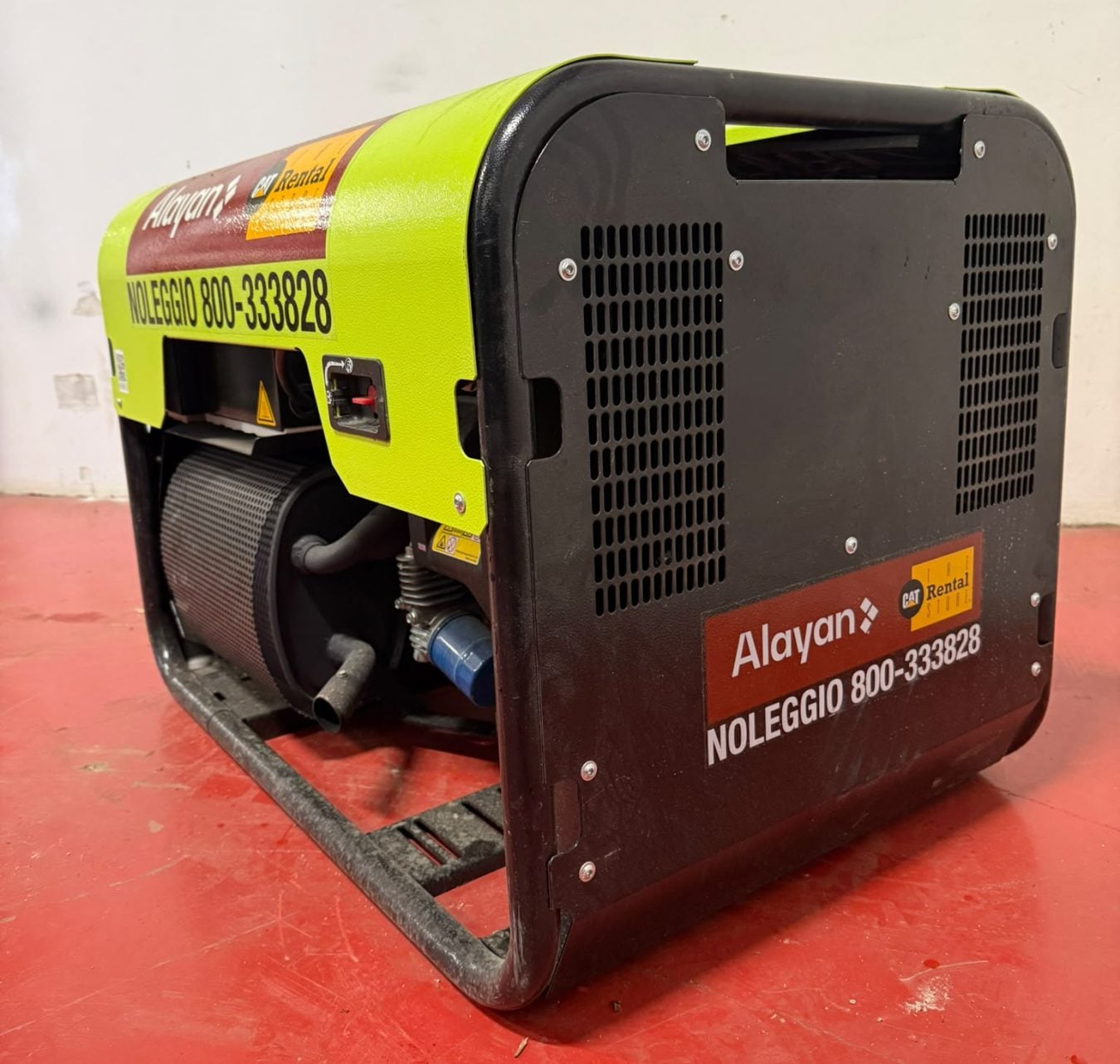
Compact generators can support these applications when their electrical specifications match the connected equipment. The number of tools, their starting requirements and the available output at the required voltage all influence the final choice.
Explore Alayan’s generators from 2.0 kVA to 10 kVA for smaller temporary power applications.
Power Requirements for Pumps and Electrically Driven Construction Equipment
Electric pumps and motor-driven construction equipment can place considerable demands on a generator, particularly during startup.
Submersible pumps are commonly used to remove water from excavations, foundations, tanks and flooded construction areas. Their electrical requirements depend on motor power, pumping capacity and operating conditions.
For example, a small electric pump with a rated input of 2 kW may require substantially more current during startup than during normal operation. Its starting characteristics must therefore be considered separately when selecting a generator.
Other equipment, such as concrete grinders, cutting machines and electrically powered lifting systems, has its own electrical requirements. These vary according to motor design, starting method and the work being performed.
Before including machinery in a generator sizing calculation, check how it is powered. Diesel-driven compressors and motor pumps have their own engines and generally do not require an external generator for operation.
Generators for Site Offices and Temporary Lighting
Temporary offices, welfare facilities and lighting installations also need electricity, and their combined consumption can be substantial.
Alayan’s modular offices can accommodate lighting, office equipment and other electrical systems required for daily site operations.
Heating and air conditioning can add considerable demand, especially when used alongside computers, lighting and auxiliary equipment.
Lighting installations should also be included in the load assessment. Electric lighting towers can use several LED lamps, with the total electricity consumption depending on their number, output and configuration.
Alayan offers temporary lighting solutions suitable for different construction environments.
Alayan has supplied generators, lighting towers, fuel tanks and modular site facilities for major construction projects. One example is a tower development in Milan, where the company provided temporary power and lighting alongside a site compound consisting of 22 modules.
This project demonstrates how temporary electrical supply supports site facilities and daily construction operations. Further details are available in Alayan’s New Constructions sector overview.
When site facilities and machinery share a generator, their combined demand must remain within the generator’s operating capacity.
How to Calculate Generator Size for a Construction Site
Start by identifying the electrical requirements of every connected device and determining which ones will operate simultaneously. Then account for motor starting loads, convert the running demand into kVA and check the generator’s electrical specifications.
These steps will help you narrow down the required capacity.
Calculate the Total Running Power of Your Equipment
Make a list of the electrical equipment that will be connected to the generator.
For each item, record:
- Its rated electrical input in W or kW.
- The number of identical devices.
- Whether it operates continuously or intermittently.
- Which other devices will be running at the same time.
Add the power ratings of the equipment expected to operate simultaneously.
Total running power (kW) = Sum of simultaneous equipment loads (kW)
For example, three devices rated at 1.5 kW, 2 kW and 3 kW have a combined running demand of 6.5 kW when operating together.
Equipment that will never run simultaneously does not necessarily need to be included in the same load scenario. Calculate the highest expected demand based on how the site will operate.
Account for Starting Power and Peak Loads
Electric motors may draw considerably more current during startup than during normal operation. Pumps, demolition equipment and other motor-driven machinery therefore require particular attention when sizing a generator.
The starting demand depends on the motor, starting method and connected mechanical load. Two machines with similar running power can have very different starting requirements.
Starting several motors at once may cause a substantial temporary load increase. Where the work allows it, switching on equipment sequentially can reduce this demand.
Even with sequential startup, the generator must handle each starting event without excessive voltage or frequency drops. Check the motor specifications and the generator’s motor-starting performance before making a final selection.
Understanding kW and kVA Requirements
Generator specifications commonly refer to two power measurements:
- kW (kilowatts): The real power used by electrical equipment.
- kVA (kilovolt-amperes): The apparent power supplied by the electrical system.
The relationship between these measurements depends on the power factor (PF).
kVA = kW ÷ Power Factor
For example, a load requiring 16 kW at a power factor of 0.8 has an apparent power requirement of:
16 ÷ 0.8 = 20 kVA
The 0.8 power factor used here is an example, not a value that applies to every device.
For a construction site with several types of equipment, use the actual power factors and electrical characteristics wherever possible.
Check Voltage, Phase and Additional Capacity
Once the required power has been estimated, check whether the generator is compatible with the connected equipment.
Pay attention to:
- Single-phase vs three-phase supply: Smaller tools commonly use single-phase electricity, while larger machines may require three-phase power.
- Voltage compatibility: Confirm the voltage required by each machine and the available generator output.
- Load balancing: Three-phase systems require suitable distribution of loads between phases.
- Generator operating rating: Check whether the published capacity refers to prime, continuous or standby operation.
- Environmental conditions: Temperature and altitude can affect the generator’s available output.
- Additional capacity: Allow for expected load variations and any extra equipment planned for the project.
Generators within the same power category may have different voltage and phase configurations. These differences must be considered when connecting single-phase tools or larger three-phase machinery.
Prime-rated generators are generally designed to supply variable electrical loads over extended operating periods, subject to the manufacturer’s limits. Standby ratings should not be used interchangeably with prime or continuous ratings.
The installation also requires appropriately sized cables, electrical protection, earthing and distribution equipment. Qualified personnel should determine these requirements in accordance with applicable electrical standards.
Fuel-powered generators must also be positioned and ventilated safely. Exhaust gases, noise limits, weather exposure and site access should be considered when planning their installation.
Practical Example – Calculating Generator Size for a Construction Site
Consider a construction site using two electric tools, a submersible pump, temporary lighting and a small site office.
The following example uses typical electrical loads to demonstrate how generator capacity can be estimated.
| Equipment | Quantity | Power per unit | Total power |
|---|---|---|---|
| Electric demolition hammer | 1 | 1.5 kW | 1.5 kW |
| Electric core drilling machine | 1 | 2.0 kW | 2.0 kW |
| Electric submersible pump | 1 | 2.0 kW | 2.0 kW |
| Temporary lighting | 1 | 0.6 kW | 0.6 kW |
| Site office equipment | 1 | 1.0 kW | 1.0 kW |
| Total | 7.1 kW |
All devices are assumed to operate simultaneously. The power ratings are example values for the calculation and should be replaced with actual equipment specifications when sizing a generator for a project.
Step 1: Calculate running demand
Adding the equipment loads gives:
1.5 + 2.0 + 2.0 + 0.6 + 1.0 = 7.1 kW
Using an assumed overall power factor of 0.8:
7.1 ÷ 0.8 = 8.875 kVA
Rounded to one decimal place, the initial running-demand estimate is 8.9 kVA.
This calculation provides a reference for the combined apparent power. Actual demand depends on the individual equipment power factors and electrical characteristics.
Step 2: Allow for operating variation
The generator should accommodate expected changes in electrical load.
For this example, a 15% allowance gives:
8.875 × 1.15 = 10.21 kVA
Rounded to one decimal place, this gives 10.2 kVA as a preliminary running-capacity estimate.
The appropriate allowance depends on equipment requirements, operating conditions and anticipated changes in demand. It does not replace the separate assessment of motor starting loads.
Step 3: Evaluate motor starting demand
The submersible pump may draw substantially more current during startup than during normal operation.
Motor starting requirements depend on the pump’s design, starting method and electrical characteristics. The rated operating power alone does not provide enough information to calculate the starting load accurately.
If a single-phase pump operating at 230 V has a starting current of 40 A, its apparent starting demand would be 9.2 kVA at nominal voltage.
At nominal voltage, its apparent starting demand would be:
230 V × 40 A ÷ 1,000 = 9.2 kVA
This calculation shows how starting current affects apparent power. The 40 A value is a hypothetical equipment specification used for this example.
The remaining equipment has a combined rated input of:
1.5 + 2.0 + 0.6 + 1.0 = 5.1 kW
If the pump starts while these devices are running, the generator must support the existing load and the temporary starting demand.
However, these values cannot simply be added together to establish the required generator rating. The result depends on the phase configuration, power factors, motor starting characteristics and the generator’s transient voltage response.
Step 4: Identify a suitable generator category
The calculation provides three useful reference values:
| Requirement | Result |
|---|---|
| Combined running power | 7.1 kW |
| Estimated running apparent power at PF 0.8 | 8.9 kVA |
| Running demand with an illustrative 15% allowance | 10.2 kVA |
| Example pump starting demand at 230 V and 40 A | 9.2 kVA |
These values show why choosing a generator based solely on running demand may be insufficient.
Alayan’s 10 kVA to 40 kVA generator category provides a starting point for evaluating suitable equipment.
The final choice depends on the generator’s rated output, motor-starting capability, transient voltage response, phase configuration and operating conditions. The pump’s example starting demand does not automatically establish the minimum generator capacity.
Confirm the electrical specifications with the rental supplier before selecting a unit.
What Generator Size Is Right for Different Construction Site Applications?
The scale of a construction project gives some indication of its electricity needs, but the equipment and operating schedule determine the actual generator capacity.
A small site running a high-demand pump or electric construction equipment may need a larger generator than a bigger project using mainly low-power devices.
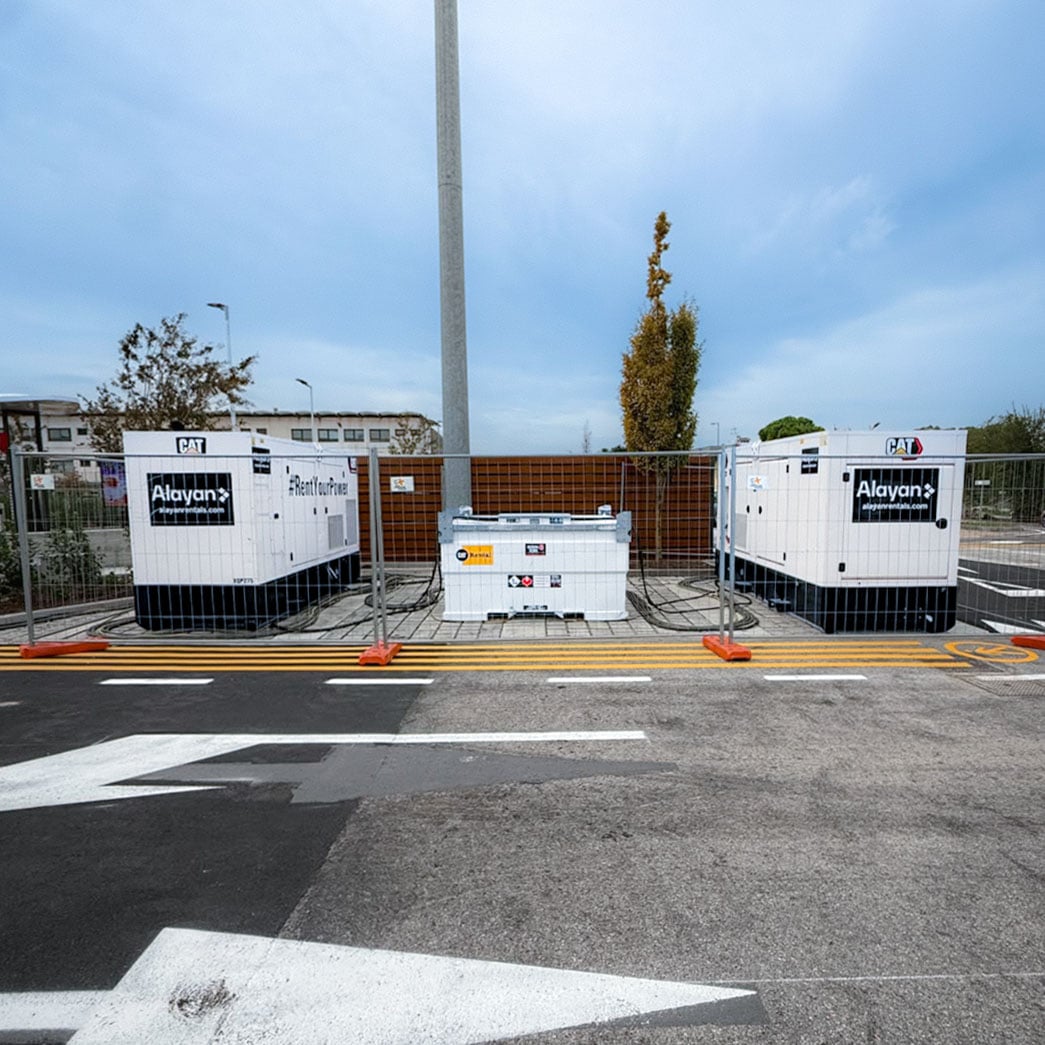
Alayan’s generator categories can be considered for different applications, provided the equipment meets the calculated load requirements.
| Construction application | Typical electrical loads | Alayan generator categories to consider |
|---|---|---|
| Small renovations and temporary works | Demolition tools, drilling equipment, basic lighting | 2–10 kVA |
| Construction sites with several workstations | Electric tools, pumps, site offices, lighting | 10–40 kVA and 50–115 kVA |
| Larger building projects | Multiple electrical systems and higher-demand machinery | 115–200 kVA and 200–300 kVA |
| Major infrastructure and complex temporary installations | Extensive power distribution, large electrical loads | Specialist Power solutions, including higher-capacity generators |
These are examples of available generator categories, not fixed capacity recommendations based on site size.
Generators for Small Construction Sites and Renovation Projects
Smaller sites often need electricity for demolition tools, drilling equipment, surface preparation and temporary lighting.
Portable generators can supply these loads where grid electricity is unavailable or insufficient.
Alayan’s 2.0 kVA to 10 kVA generators include compact units for lower-power applications. Their suitability depends on the connected equipment’s running demand, starting characteristics and voltage requirements.
A single electric tool may operate within the capacity of a compact generator, while several tools working simultaneously can require considerably more power.
For example, two tools with a combined running input of 3.5 kW cannot be supplied by a generator whose available continuous output is only 2 kW.
Larger generators may be necessary when several electric tools or additional lighting systems are used together.
Generators for Medium-Sized Construction Sites
Projects with several workstations, water pumps, temporary offices and lighting systems may need generators with greater capacity.
The total demand can increase considerably when motor-driven equipment operates alongside continuous loads, such as lighting or office facilities.
Depending on the calculated requirements, Alayan offers:
These categories can accommodate different combinations of electrical loads, subject to the specifications of each generator.
Reassess power demand when new machinery arrives on site or the construction schedule changes.
Generators for Large Construction and Infrastructure Projects
Large construction and infrastructure projects may need extensive temporary power systems for multiple work areas, industrial equipment, pumping installations and site facilities. Electrical loads can be substantial, particularly when several activities take place simultaneously.
A single generator may not provide the required capacity or operational flexibility. Depending on the site, the solution may involve higher-capacity units, several generators or parallel configurations.
Generator selection also depends on operating duration, peak loads, voltage requirements and the electrical distribution network. Complex installations may require a power system designed specifically for the project.
Tailored Power Solutions from Alayan Power
For construction and infrastructure projects with demanding electrical requirements, Alayan Power develops customized temporary power systems, supported by engineering, installation and technical services.
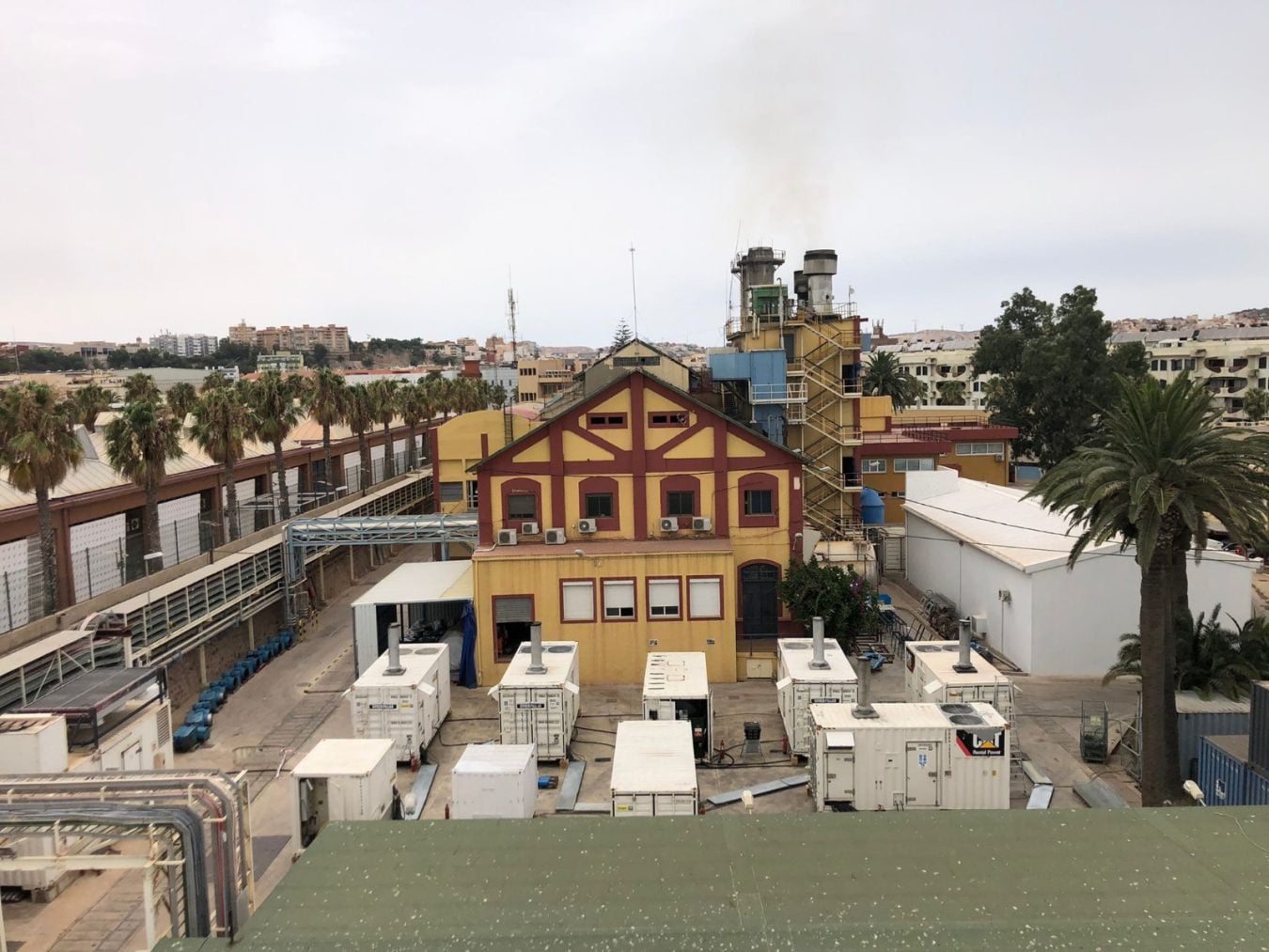
Its offering includes generators from 30 kVA to 2,000 kVA per unit, available in enclosed and containerized versions, with options for parallel operation.
Depending on project requirements, available generator categories include:
- Generators from 115 kVA to 200 kVA
- Generators from 300 kVA to 500 kVA
- Generators from 1,400 kVA to 2,000 kVA
Alayan Power’s turnkey service covers site surveys, engineering design, equipment selection, delivery, installation and commissioning.
Specialist equipment and services include:
- Electrical distribution comprising cables, distribution and switchgear panels and, where necessary, transformer stations ranging from 1.6 to 8 MVA
- Load bank testing to verify the system’s behaviour prior to commissioning,
- Operational support to plan diesel fuel supplies, maintenance and technical assistance during the hire period
Construction projects can also use diesel light towers and electric light towers for temporary lighting requirements.
Alayan’s New Constructions sector includes an infrastructure project involving the construction of a major viaduct. The company provided coordinated equipment rental, including generators, lighting systems, earthmoving machinery and other site equipment.
Such projects demonstrate how temporary power systems form part of a larger construction setup, where equipment selection, installation and operational coordination must be planned together.
Learn more about Alayan Power – Power Generation and Temperature Control Solutions and its specialist services.
Find the Right Construction Site Generator at Alayan
Choosing a construction site generator starts with a clear picture of the electrical load and how the equipment will be used throughout the project.
Before arranging generator rental, confirm:
- The total running and starting power requirements.
- The voltage and phase configuration of connected equipment.
- The expected operating hours and project duration.
- Fuel capacity, refuelling arrangements and site access.
- Electrical distribution and installation requirements.
- Any additional equipment planned for later construction stages.
Alayan offers generators for rent for different construction applications, from compact units for smaller electrical loads to industrial generators for more demanding projects.
Where a project requires complex electrical infrastructure, higher capacity or dedicated technical management, Alayan Power provides specialist temporary power solutions.
For guidance on the rental process, equipment selection and other rental considerations, see Alayan’s complete guide to generator rental.
Explore Alayan’s generator rental options or contact the team to discuss your construction site’s electrical requirements.

